
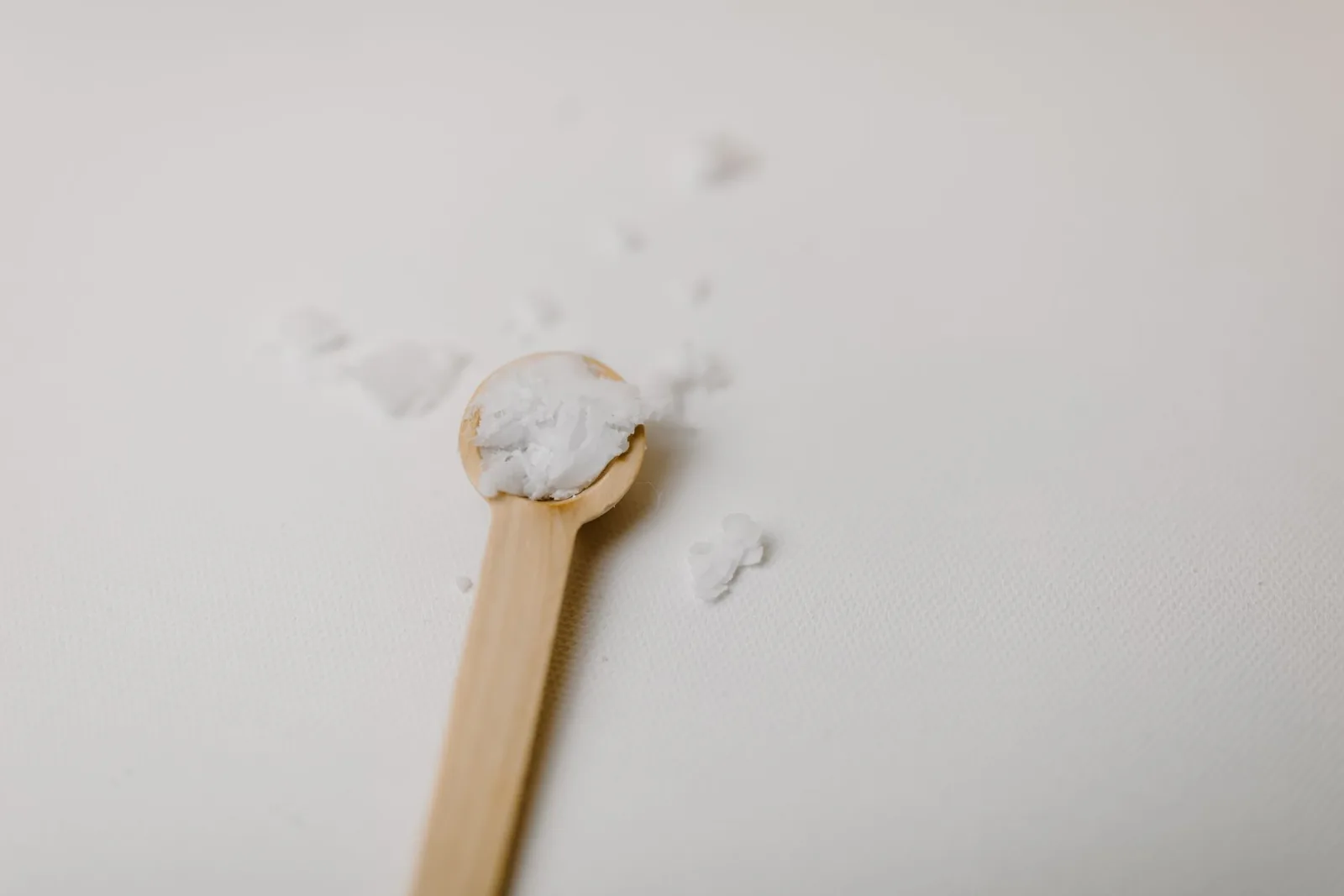
In short: maltodextrin is a carbohydrate made by partial hydrolysis of corn, potato or rice starch. Made of glucose chains and defined by a dextrose equivalent (DE) below 20, it tastes barely sweet. You find it in sports drinks, mass gainers and as a carrier in many powders.
You have probably read it on the label of an isotonic drink, a mass gainer or a flavoured powder: maltodextrin is one of the most common ingredients in sports nutrition. Here is what it is, how it is made and how to spot it on a label.
Maltodextrin at a glance
| Key point | What to remember |
|---|---|
| Family | Complex carbohydrate, glucose polymer |
| Origin | Partial hydrolysis of corn, potato or rice starch |
| Technical definition | Dextrose equivalent (DE) below 20 |
| Taste | Barely sweet |
| On the label | Ingredient listed by name, no E number |
| Nutrition table | Counted under carbohydrates, not under “of which sugars” for its long chains |
| Common uses | Sports drinks, mass gainers, carrier for flavoured powders |
What is maltodextrin?
US regulations, among the few to give a precise definition, describe maltodextrin as a nonsweet glucose polymer whose units are linked mainly by alpha 1-4 bonds, with a dextrose equivalent below 201. The dextrose equivalent measures how far the starch has been broken down: 0 for intact starch, 100 for pure glucose (dextrose). The higher the DE, the shorter the chains.
Above 20, it is no longer called maltodextrin but glucose syrup, a sweeter ingredient. Maltodextrin therefore sits between starch, which has no sweet taste, and simple sugars.
How is it made?
Maltodextrin is prepared by partial hydrolysis of a starch, that is by cutting its long glucose chains with enzymes or acids, then drying the result into a white powder or concentrating it into a solution1. The most common starting starches are corn, potato and rice.
In Europe, this production method has a consequence on the label: the food additives regulation excludes dextrins and starch treated with amylolytic enzymes from its definition2. Maltodextrin is therefore not an additive: it appears in the ingredient list by its name, with no E number.
What is maltodextrin used for in products?
| Product | Role of maltodextrin |
|---|---|
| Sports drink | Provide quickly available carbohydrates without making the drink too sweet |
| Mass gainer | Increase calorie intake, combined with proteins such as casein or whey |
| Flavoured powder | Act as a carrier for flavours and small amounts of active ingredients |
In sports drinks, maltodextrin has a precise regulatory interest. The European register authorises two claims for carbohydrate-electrolyte solutions: they contribute to the maintenance of endurance performance during prolonged endurance exercise, and they enhance the absorption of water during physical exercise3. To bear them, the drink must provide 80 to 350 kcal per litre from carbohydrates, with at least 75 % of the energy from carbohydrates that induce a high glycaemic response, such as glucose, glucose polymers and sucrose, as well as 460 to 1,150 mg of sodium per litre and an osmolality of 200 to 330 mOsm/kg.
To place these drinks among other exercise products, read the sports nutrition guide.
Maltodextrin and labels: sugar or not?
This is the most frequent question. The European regulation on food information to consumers defines “sugars” as all monosaccharides and disaccharides present in a food4. The chains of three glucose units or more that make up most of maltodextrin are not included: they are counted under “carbohydrate”, not under “of which sugars”.
A product rich in maltodextrin can therefore show little sugar while providing plenty of carbohydrates with a high glycaemic response. The right reflex is to look at the carbohydrate line and the ingredient list, not only at the sugars. The guide to choosing a supplement brand covers the other points to check on a label.
Frequently asked questions
What is maltodextrin?
Maltodextrin is a powdered carbohydrate made by partial hydrolysis of a starch (corn, potato, rice). It is made of chains of glucose molecules and is defined by a dextrose equivalent (DE) below 20. Barely sweet, it is mainly used as an energy source in sports drinks and as a carrier in powders.
Is maltodextrin a sugar?
It is a carbohydrate, but not a “sugar” in the labelling sense. The European regulation on food information to consumers only counts monosaccharides and disaccharides as sugars. The longer glucose chains of maltodextrin are therefore counted under carbohydrates, not under “of which sugars”.
Is maltodextrin an additive?
No. The European regulation on food additives excludes dextrins and starch treated with amylolytic enzymes from its definition. Maltodextrin is therefore listed among the ingredients by its name, with no E number.
Why is maltodextrin used in sports drinks?
Because it provides carbohydrates with a high glycaemic response without making the drink too sweet. The European regulation lists glucose polymers among the carbohydrates that allow a carbohydrate-electrolyte solution to bear the claim on maintaining performance during prolonged endurance exercise, under precise composition conditions.
Find all the other terms in the food supplement glossary.