
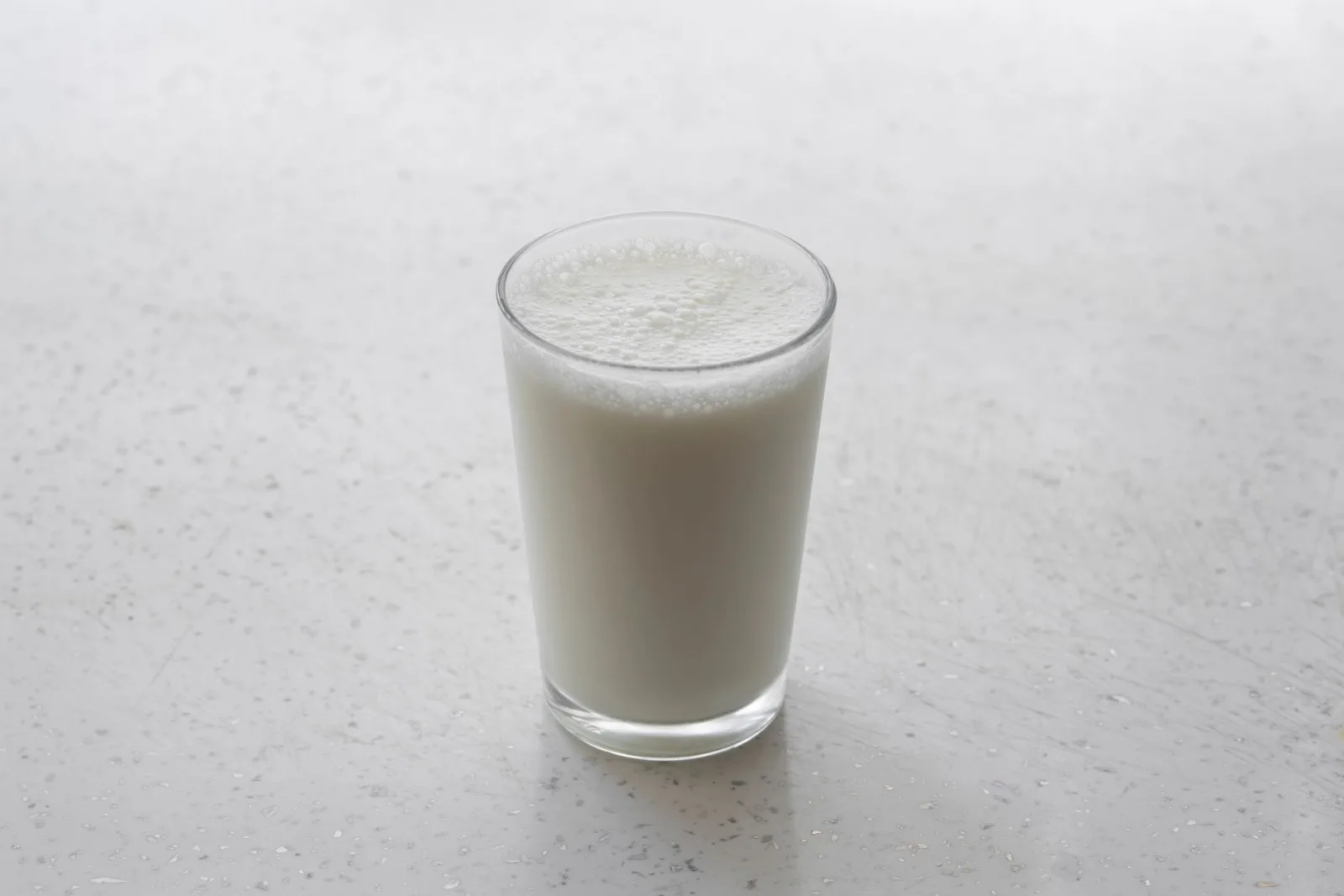
In short: casein is the main protein in cow’s milk, making up about 80 % of its proteins. It is a complete protein, digested more slowly than whey, which spreads the release of its amino acids into the blood. It is sold as a powder under the name micellar casein, often taken in the evening.
Casein is the “slow” protein of the sports nutrition aisle, often presented as the evening protein. Before choosing a powder, here is what it is, what sets it apart from whey and the precautions to know.
Casein at a glance
| Key point | What to remember |
|---|---|
| Family | Complete protein from milk |
| Share of cow’s milk protein | About 80 % |
| Structure in milk | Micelles 30 to 600 nm in diameter |
| Digestion speed | Slower than whey |
| Common powder form | Micellar casein |
| Allergen | Yes: milk is one of the allergens to flag on the label |
| Vegan | No, it comes from milk |
What is casein?
Cow’s milk contains two main families of proteins. Caseins make up about 80 % of them1, the rest being mostly whey proteins. In milk, caseins form highly hydrated spherical aggregates called casein micelles, ranging from 30 to 600 nanometres in diameter1.
Like whey, casein is a complete protein: it provides all the essential amino acids. It is the protein that coagulates when milk curdles, which explains its central role in cheesemaking. The micellar casein sold as a powder keeps this micelle structure, hence its name.
Casein or whey: what changes
| Criterion | Casein | Whey |
|---|---|---|
| Share of milk protein | About 80 % | Most of the rest |
| Digestion speed | Slow | Fast |
| Amino acid release | Gradual | Fast |
| Leucine | Present | Richer than casein |
| Time often chosen | Evening, between meals | Around training |
According to the NIH fact sheet on exercise supplements, casein, the main complete protein in milk, is digested more slowly than whey, so its amino acids are released into the blood more slowly2. The same fact sheet notes that whey contains more leucine than casein or soy. The choice between the two therefore depends mostly on when you take it and on your preferences, not on one being superior to the other. To go further, the guide to the alternative to whey protein compares other protein sources.
Why casein is often taken in the evening
Its slow digestion makes casein the protein most often mentioned for the night. The NIH reports studies in which participants took a bedtime drink containing 27.5 or 40 g of casein, which increased circulating amino acid levels throughout the night2. This is not a rule: total protein intake over the day remains the main benchmark, and food covers a large part of it. The list of high-protein foods helps you take stock before adding a powder.
On the claims side, the European register authorises three claims for protein, whatever its source: it contributes to a growth in muscle mass, to the maintenance of muscle mass and to the maintenance of normal bones3. They may only be used for a food that is at least a “source of protein” as defined by European regulation.
Precautions before taking casein
The European regulation on food information to consumers lists milk among the allergens to be flagged4. Casein is not suitable for a vegan diet either: plant protein is then the option to look at. Finally, a casein powder remains a supplement to your diet, to fit into your overall intake, as the guide to protein powder without weight training reminds you.
Frequently asked questions
What is casein?
Casein is the main protein in cow’s milk: caseins make up about 80 % of its proteins, the rest being mostly whey proteins. In milk, they form small aggregates called micelles. In sports nutrition, casein is sold as a powder, often under the name micellar casein.
What is the difference between casein and whey?
Both are complete proteins from milk. Casein is digested more slowly than whey, so its amino acids reach the blood more gradually. Whey, for its part, contains more leucine than casein.
Why take casein in the evening?
Because it releases its amino acids slowly. Studies cited by the NIH gave participants a bedtime drink of 27.5 or 40 g of casein, which increased circulating amino acid levels throughout the night. It is not a requirement: total protein intake over the day remains the main benchmark.
Is casein suitable for people with a milk allergy?
No. Casein is a milk protein, and milk is one of the allergens that European labelling must emphasise. If you are allergic to cow’s milk protein, a plant protein is an alternative to discuss with your doctor or allergist.
Find all the other terms, including the maltodextrin used in mass gainers, in the food supplement glossary.
Sources
Lin et al., Nutrition Reviews, “Bioactives in bovine milk: chemistry, technology, and applications”, 2021 (PubMed Central, NIH) ↑ ↑
NIH, Office of Dietary Supplements, “Dietary Supplements for Exercise and Athletic Performance” ↑ ↑
European Commission, EU register of nutrition and health claims ↑
Regulation (EU) No 1169/2011 on the provision of food information to consumers, Annex II ↑